

God Has Removed Our Cage
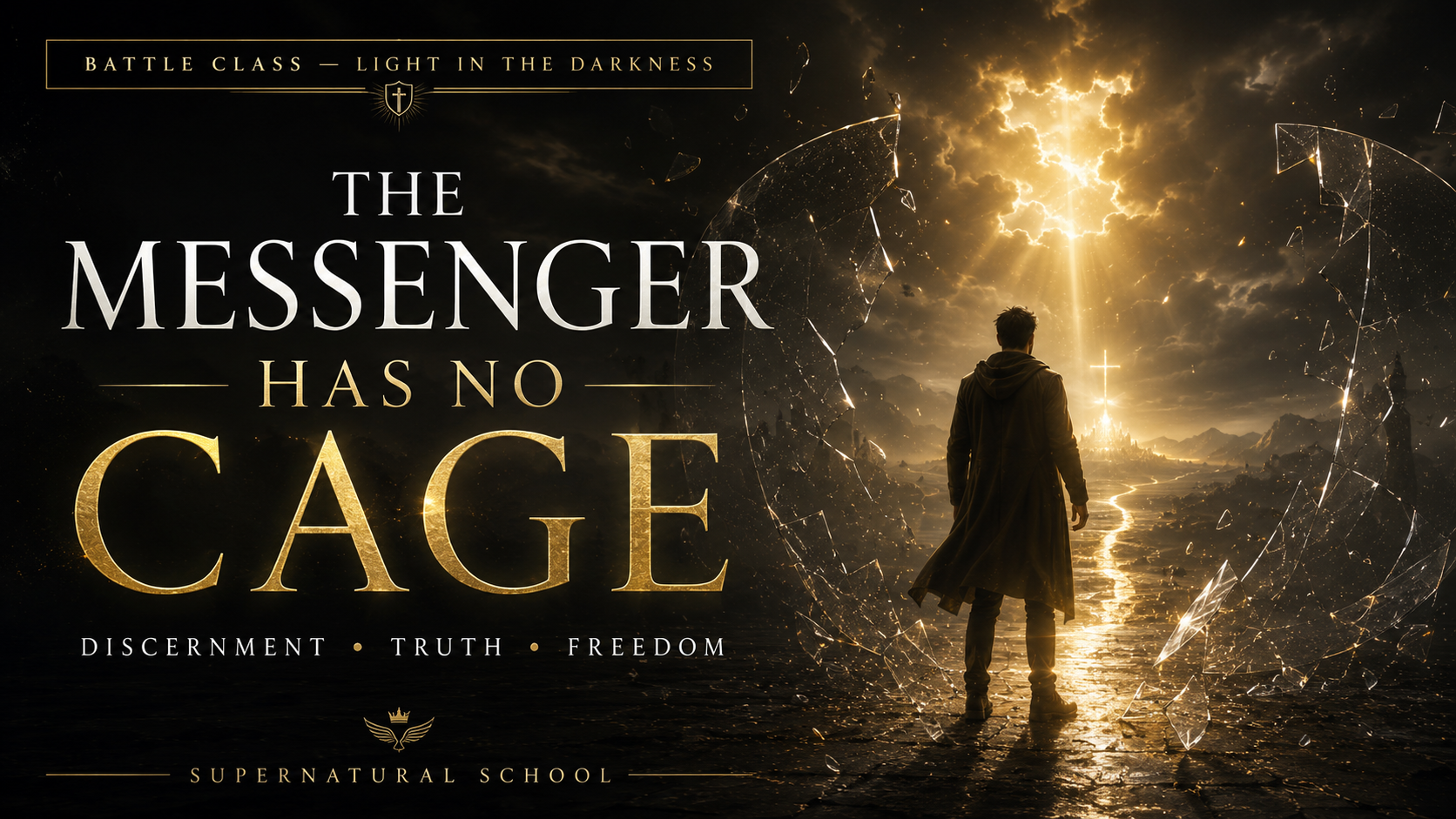
There are times when God does not merely comfort us inside limitation. He reveals that the limitation no longer has the authority we thought it had.
The door is open.
The chain is broken.
The cage has been removed.
The question is no longer whether freedom is available. The question is whether we will now think, speak, and act like people who have been made free.
“Therefore if the Son makes you free, you shall be free indeed.”
— John 8:36, NKJV
We Can Continue Living as Though the Cage Remains
A person can be released physically while still living mentally inside the place that once restrained them.
This happens when past disappointment becomes an expectation.
It happens when repeated opposition trains us to stop trying.
It happens when fear teaches us to remain small, silent, hesitant, and passive.
The barrier may be gone, but our behaviour can continue to honour it.
We may still say:
“I cannot do that.”
“I am not ready.”
“Nothing will change.”
“God must do everything.”
“I should remain where I am until I feel more confident.”
But confidence is not always the first evidence of freedom.
Sometimes obedience is.
God may remove the cage before our emotions have caught up with what He has done.
That is why truth must govern us.
Facts Are Not Always the Final Truth
Facts describe what we can presently see.
Truth reveals what God has established.
The fact may be that you feel weak.
The truth may be that His strength is made perfect in weakness.
The fact may be that you have failed before.
The truth may be that you are still His workmanship, created for good works.
The fact may be that the opposition appears powerful.
The truth is that Christ has already triumphed over principalities and powers.
“Having disarmed principalities and powers, He made a public spectacle of them, triumphing over them in it.”
— Colossians 2:15, NKJV
Biblical faith does not require us to deny facts.
It requires us to place them beneath the authority of truth.
We are not called to pretend there is no darkness.
We are called to refuse to let darkness define the outcome.
Faith Is Not Pressure on a Situation
Faith is not emotional force.
It is not repeating words until we feel stronger.
It is not placing spiritual pressure upon a circumstance while ignoring what God is actually saying.
“So then faith comes by hearing, and hearing by the word of God.”
— Romans 10:17, NKJV
Faith begins with hearing.
We listen to God through Scripture.
We allow the Holy Spirit to bring truth into focus.
We test what we perceive.
Then we respond.
Faith moves from truth, not panic.
Faith moves from revelation, not presumption.
Faith acts because God has spoken.
This means that before we speak into a situation, we should listen.
Before we repeat a fearful report, we should ask what Scripture says.
Before we accept limitation as permanent, we should ask whether God has already removed the barrier.
God Has Not Called Us to Repeat the Darkness
Discernment is not merely the ability to identify what is wrong.
It is the ability to recognise what God is doing and respond correctly.
We can become so skilled at describing confusion, corruption, spiritual opposition, and human failure that we forget our assignment.
We are not here merely to repeat the garbage.
We are here to deal with it in truth, wisdom, prayer, obedience, service, and the authority of Jesus Christ.
Philippians tells us where to place our attention:
“Whatever things are true, whatever things are noble, whatever things are just, whatever things are pure, whatever things are lovely, whatever things are of good report… meditate on these things.”
— Philippians 4:8, NKJV
This is not denial.
It is disciplined focus.
The believer does not allow darkness to choose the subject of every meditation.
We train our attention upon the character, promises, works, and present lordship of God.
You Have Been Sent From His Presence
A messenger must first stand before the One who sends them.
Our identity is not established by comparison.
Our place is not made important by public recognition.
Our assignment is not validated by copying somebody else’s testimony.
David did not become a shepherd because he was trying to imitate someone else.
His private history with God prepared him for his public assignment.
He did not wear Saul’s armour.
He acted from what God had already formed within him.
In the same way, you do not need another person’s life.
You need faithfulness within your own calling.
God has created each member of His body with purpose.
Your place may look different from someone else’s, but different does not mean insignificant.
“For we are His workmanship, created in Christ Jesus for good works, which God prepared beforehand that we should walk in them.”
— Ephesians 2:10, NKJV
You are not an accident.
Your assignment is not decorative.
Your obedience matters within the order of God.
We Must Stop Speaking Like Prisoners
There is a difference between humility and unbelief.
Humility says:
“I depend upon God.”
Unbelief says:
“I cannot obey what He has told me to do.”
Humility recognises that the power comes from Him.
Unbelief refuses to take responsibility for acting upon what He has provided.
Jesus commanded His disciples to go, preach, serve, heal, disciple, and bear witness.
They were not independent of Him.
They were sent by Him.
The same Christ who sends also supplies.
The same Christ who commands also remains present.
The same Christ who frees us also teaches us how to walk as free people.
We must therefore stop speaking as though God has abandoned us inside an impossible assignment.
We must stop presenting ourselves as permanently restrained.
We must stop calling the cage real when Christ has opened the door.
God Has Removed Our Cage
The cage may have been fear.
It may have been shame.
It may have been comparison.
It may have been spiritual intimidation.
It may have been disappointment, grief, passivity, or the belief that someone else is more qualified to obey.
Whatever form it took, it must not continue to govern our speech.
God has removed our cage.
Now we must act, speak, and live like it.
This does not mean recklessness.
It means obedience.
It does not mean arrogance.
It means agreement with God.
It does not mean pretending we are strong in ourselves.
It means refusing to deny what Christ has done.
A Spirit-Led Response
Take time today to ask:
Where am I still behaving as though I am restrained?
What sentence do I repeatedly speak that agrees with the old cage?
What truth from Scripture directly confronts that belief?
What act of obedience would demonstrate that I believe God has made me free?
Where has fear been louder than my assignment?
Then pause.
Listen.
Test what comes to mind by Scripture.
Write down one truth.
Take one obedient step.
Freedom becomes visible when truth becomes practice.
Declaration
God has removed our cage.
We will not continue speaking as though the door is closed.
We will not honour restraints that Christ has broken.
We will stand before God.
We will hear the truth.
We will take our place.
We will act, speak, and live like people whom the Son has made free.